
Losing a tooth, or several teeth, affects more than just your smile. It can change the way you eat, the way you speak, and even the shape of your face over time. When a tooth is missing, the surrounding teeth can shift into the empty space. Your bite can become unbalanced. Your jawbone can even begin to shrink where the tooth root once was.
If you are missing one or more teeth, a dental bridge can restore both the look and the function of your smile. Dr. Morgan Chambers creates custom bridges designed to fit comfortably, feel secure, and blend in naturally with your other teeth.

What Is a Dental Bridge?
Think of a bridge exactly as it sounds. It closes the gap where one or more teeth are missing. A replacement tooth, called a pontic, is held in place by anchors on either side of the gap. These anchors can be your natural teeth or dental implants.
A bridge can:
- Restore your ability to chew and speak normally
- Prevent remaining teeth from shifting out of place
- Maintain the shape of your face and jaw
- Distribute the force of your bite evenly
- Give you back a complete, confident smile
Types of Dental Bridges
Dr. Chambers will recommend the type of bridge that best fits your situation. The right choice depends on where the gap is, how many teeth are missing, and the health of your surrounding teeth.
- Traditional Bridge: This is the most common type. It uses dental crowns on the healthy teeth on either side of the gap. The false tooth (or teeth) in the middle is attached to the crowns. It’s strong and reliable for replacing one or more missing teeth.
- Implant-Supported Bridge: Instead of using crowns on natural teeth, this bridge is anchored by dental implants. The implants are placed in your jawbone and act as artificial roots. This option is the strongest and most stable, and it helps prevent bone loss. It’s an excellent choice when multiple teeth are missing in a row.
- Cantilever Bridge: This type is used when there’s only one healthy tooth next to the gap. The bridge is anchored to that single tooth. It’s less common today because it can put extra stress on the supporting tooth.
- Maryland Bridge: This is a more conservative option. Instead of crowns, it uses a metal or porcelain framework bonded to the back of the teeth next to the gap. It’s used for replacing front teeth. However, it’s not as strong as a traditional or implant bridge.
Dr. Chambers prefers implant-supported bridges whenever possible because they are the most stable and protect your jawbone. However, she will always recommend the option that is best for your unique health and goals.
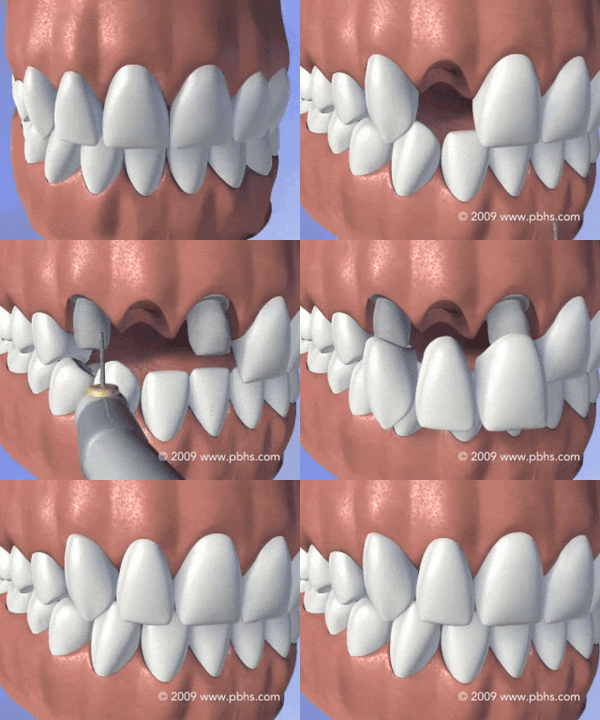
Traditional Dental Bridge Procedure
The Dental Bridge Procedure: What to Expect
If you have never had a bridge before, knowing what to expect can help you feel more at ease. Here’s how Dr. Chambers approaches the process.
Step 1: Your Comprehensive Exam
Every good outcome starts with a thorough evaluation. Dr. Chambers will examine not just the gap, but your entire mouth. She will look at the health of your teeth, gums, jaw joints, and bite. This ensures that any treatment she recommends is built on a stable, healthy foundation.
Step 2: Creating Your Custom Plan
Once Dr. Chambers has all the information she needs, she will discuss your options with you. She will explain the pros and cons of each type of bridge and help you choose the path that fits your needs and budget. If you are using natural teeth as anchors, those teeth will be gently prepared for crowns.
Step 3: Taking Impressions
Dr. Chambers will take precise digital scans or impressions of your teeth. These are sent to a high-quality dental laboratory here in the U.S. Skilled ceramists will craft your custom bridge to her exact specifications. In the meantime, we’ll provide you with a temporary bridge to protect your teeth and maintain your smile.
Step 4: Placing Your New Bridge
In about two to three weeks, your permanent bridge will be ready. You will return to our Lexington office. Dr. Chambers will carefully check the fit, the comfort, and the look of your new bridge.
She will make sure your bite feels right and that the color blends seamlessly with your natural teeth. Once everything is perfect, she will cement it securely in place.
Caring for Your Dental Bridge
A dental bridge is an investment in your long-term health. With proper care, it can last for many years.
- Brush and floss daily. This is just as important for your bridge as it is for your natural teeth. Plaque can build up under the bridge and cause decay in the anchor teeth. Dr. Chambers will show you special flossing techniques to clean underneath the false tooth.
- Use a soft-bristled toothbrush. This is gentle on both your natural teeth and the bridge material.
- Avoid chewing hard or sticky foods on your bridge. Ice, hard candy, and caramel can potentially damage the restoration.
- Keep up with your regular dental checkups. We will examine your bridge at each visit, clean around it thoroughly, and make sure everything is healthy. Regular visits are the key to catching small issues before they become big problems.
Frequently Asked Questions
Is a dental bridge painful to get?
Most patients feel little to no discomfort. The procedure is done with local anesthesia to numb the area. Afterward, there may be some mild sensitivity, but it usually fades within a few days.
How long does a dental bridge last?
With good care, a traditional bridge can last 10 to 15 years or longer. Implant-supported bridges can last even longer because the implants themselves are designed to last a lifetime, though the bridge may need replacement after many years.
How many teeth can a bridge replace?
A traditional bridge can typically replace one to three missing teeth in a row. An implant-supported bridge can sometimes replace up to six or more teeth, depending on the location and the number of implants placed.
What happens if a bridge breaks or comes loose?
If your bridge ever feels loose or gets damaged, call our office right away. Don’t wait. In some cases, we may be able to re-cement it or repair it. In others, you may need to replace it. The sooner we see it, the better.
Does insurance cover dental bridges?
Many dental insurance plans cover a portion of the cost of a bridge because it’s considered a restorative procedure. Coverage varies by plan. We will work with your insurance provider to help you understand your benefits and maximize your coverage.
Can I get a bridge if I have missing teeth on both sides of my mouth?
Yes. Dr. Chambers can create a treatment plan that addresses multiple missing teeth. This might involve multiple bridges or a combination of bridges and implants. She will design a plan that restores balance and function to your entire smile.
Restore Your Smile and Your Confidence
You don’t have to live with the discomfort and self-consciousness of missing teeth. A dental bridge can give you back a full, functional, beautiful smile.
Call us today at 859-251-3809 or request an appointment online. Let’s talk about how your dentist in Lexington, KY can help you complete your smile. We welcome new patients from all around Lexington and Fayette County.