
You tried a drugstore whitening kit, or maybe had it done at a dentist’s office, and the results weren’t what you hoped for. Maybe your teeth got brighter but not as bright as you wanted. Maybe one tooth stayed stubbornly dark while the others lightened. You’re now wondering whether whitening was ever the right choice, or whether you need something else entirely.
Whitening works well for some kinds of discoloration and is a poor fit for others. The difference depends on the type of stain you’re dealing with.
Dr. Morgan Chambers is a cosmetic and family dentist in Lexington, KY, and she has this conversation regularly. Patients come in frustrated that whitening didn’t work. Often the answer is that whitening was never going to work for their specific situation. Here’s why, and what to do about it.
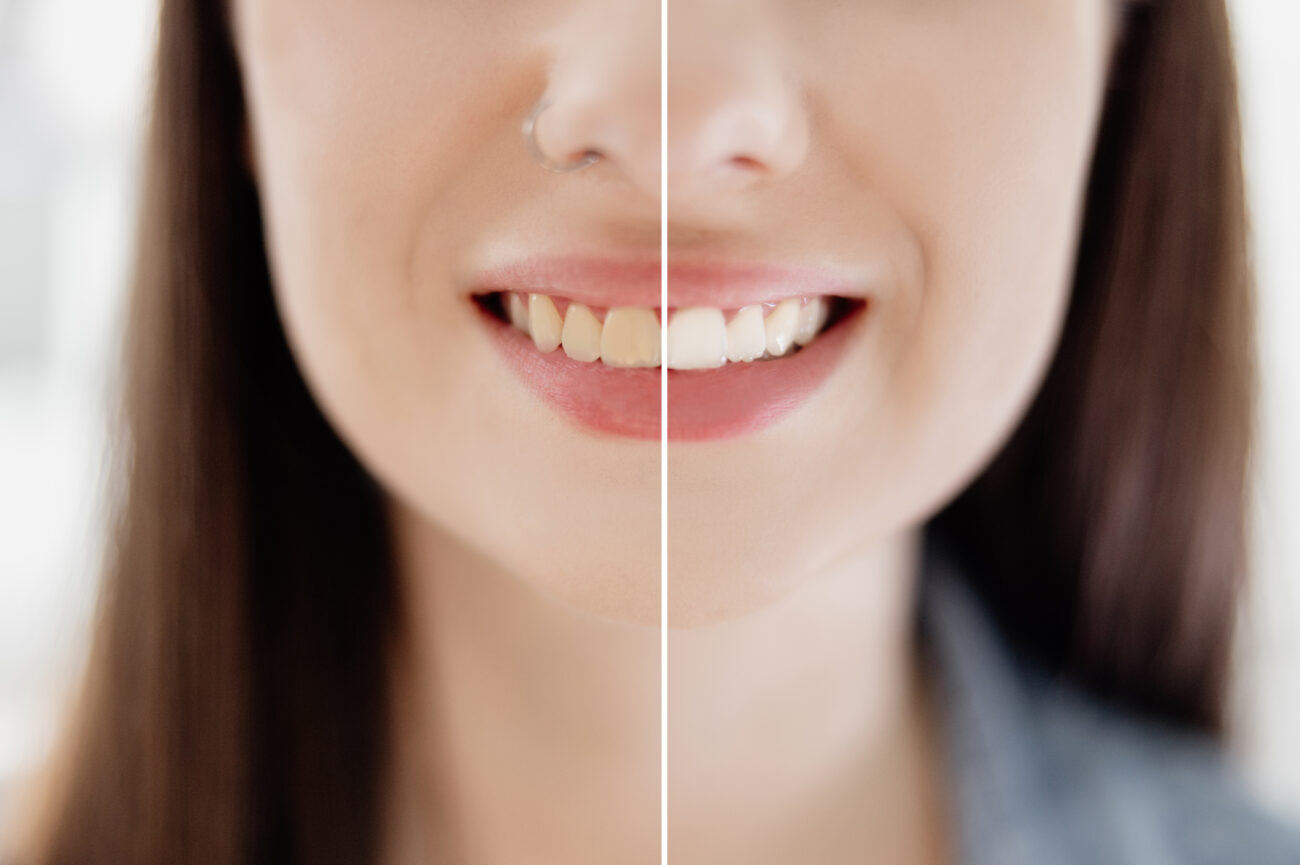
The Two Kinds of Tooth Stains
Dental discoloration generally falls into two categories. Knowing which one you have explains why whitening worked or didn’t.
- Extrinsic stains occur on the tooth’s surface. They come from coffee, tea, red wine, tobacco, and certain foods. Whitening targets these stains. Whitening gels lift surface stains and can lighten the tooth’s overall shade by several shades.
- Intrinsic stains are inside the tooth. They come from trauma, certain medications (like tetracycline), fluorosis, aging, or a root canal that has darkened the tooth from the inside. These stains don’t respond well to whitening because the whitening agent isn’t reaching the source of the color.
If you whitened and didn’t get the result you wanted, your discoloration is most likely intrinsic, or a mix of both. In that case, no amount of whitening gel will fix it. You need a different approach.
Why One Tooth Can Be Darker Than the Others
This is a very common complaint, and it’s worth addressing directly because it’s the situation where whitening frustrates patients most.
A single dark tooth usually has a specific cause. Often, it’s a tooth that sustained trauma years ago, had a root canal, or has a large filling or a history of decay. In some cases, the tooth is naturally a slightly different shade.
Whitening the whole mouth won’t fix a single dark tooth. In fact, it can make the contrast more noticeable because the surrounding teeth get brighter while the darker tooth stays the same.
The right solution for a single dark tooth depends on why it’s dark. Options include internal bleaching (for a tooth that had a root canal), a porcelain veneer, or a crown. Dr. Chambers evaluates the specific cause and recommends the option that gives the most natural result. That’s part of the complete-dentistry approach at Complete Dentistry For All Ages: she treats the cause of the discoloration, not just applies a product.
What Whitening Actually Does Well
To be clear, whitening is a genuinely good treatment for the right patient. It works well for:
- Overall yellowing from coffee, tea, or tobacco
- Mild surface stains
- Brightening the smile before a big event (in-office whitening can lighten teeth in about an hour)
- Maintaining a whiter smile over time (with touch-ups)
Dr. Chambers offers both in-office whitening and take-home kits. Professional in-office whitening gives dramatic results in a single visit. Take-home kits allow gradual brightening on your schedule. Both are professional-grade and more effective than drugstore options.
Whitening results can last from several months to two years, depending on your diet and habits. Touch-up treatments can extend the brightness.
What Whitening Can’t Do
Here’s what matters for patients who were disappointed:
- Whitening can’t change a tooth’s shape. If the issue is a chipped, worn, or uneven edge, whitening won’t help.
- Whitening can’t close a gap. Small gaps between teeth can sometimes be improved with bonding or veneers, but whitening won’t change the spacing.
- Whitening can’t straighten teeth. If your teeth are rotated or overlapping, whitening will brighten them but won’t change their position. Invisalign or veneers are options in that case.
- Whitening can’t fix a single dark tooth. As noted above, this usually needs a different approach.
- Whitening can’t fix intrinsic stains. Tetracycline staining, fluorosis, and trauma-related stains generally don’t respond to whitening.
- Whitening can’t fix restorations. Crowns, veneers, and composite bonding don’t respond to whitening. If you whiten your natural teeth, your existing restorations may look darker by comparison. Dr. Chambers will evaluate this before recommending whitening.
What to Do If Whitening Didn’t Work
If whitening didn’t give you the result you wanted, the next step is a consultation. Not another whitening attempt. A real evaluation of what’s causing the discoloration and the right treatment.
Dr. Chambers starts with a thorough exam. She’s a member of the American Academy of Cosmetic Dentistry, and she takes a whole-system approach to cosmetic work. She’ll look at the specific tooth or teeth bothering you, evaluate the cause of the discoloration, and explain your options.
For a single dark tooth, that might mean internal bleaching, a veneer, or a crown. For overall discoloration with intrinsic causes, porcelain veneers might be the best option. If whitening doesn’t fully resolve minor surface issues, you might need a combination of whitening and bonding.
Porcelain veneers can last 10 to 15 years or longer with good oral hygiene and regular dental visits. They resist stains better than natural teeth. Bonding typically lasts three to seven years, and it’s a more affordable option for smaller concerns. Dr. Chambers will explain each option’s expected lifespan during your consultation.
What to Ask Before You Whiten Again
If you’re considering whitening again, here are a few questions to ask first:
- What kind of stain do I have? If your dentist can’t tell you whether it’s extrinsic or intrinsic, ask for a clearer explanation. It matters for whether whitening will work.
- Is one tooth darker than the others? If so, whitening alone won’t fix it.
- Do I have existing restorations that would need to be replaced or matched? Whitening natural teeth without considering existing crowns or bonding can create a mismatch.
- What’s the plan if whitening doesn’t work? A good Lexington cosmetic dentist should explain the next step before you commit to whitening.
Dr. Chambers will answer all of these during a cosmetic consultation. She’ll also show you a digital preview of what your smile could look like after treatment, so you can decide whether the result is worth the investment.
Why This Matters in Lexington
If you’re in Lexington, Nicholasville, Versailles, Georgetown, or anywhere in Central Kentucky and you’ve been disappointed by whitening, you’re not out of options. The issue usually isn’t that whitening failed. It’s that whitening wasn’t the right treatment for your specific discoloration.
Our office is at 2353 Alexandria Dr, Suite 300, in the Cygnus building near Harrodsburg Road and New Circle Road. We have free parking! We serve patients from Chevy Chase, Beaumont, Hartland, Lansdowne, Palomar, Masterson Station, Andover, Hamburg, and throughout Fayette and surrounding counties.
Call us at 859-251-3809 or request an appointment online. We’ll identify the cause of the discoloration, explain your options honestly, and help you choose the treatment that delivers the results you want.